Men Explain Things to Me (and A.I. misquotes those things)
Fall Girls Entry #5: Confirmation bias, four young men gather in a bar, and citational practice as activism

Confirmation Bias
Confirmation bias (also confirmatory bias, myside bias,[a] or congeniality bias)[2] is the tendency to search for, interpret, favor and recall information in a way that confirms or supports one's prior beliefs or values.[3]
Just last week, I finished reading the updated edition of Rebecca Solnit’s essay collection, Men Explain Things to Me, named for the title essay which went viral a few years ago and, arguably, led to the coining and widespread adoption of “mansplaining.”
Around the same time, I saw a post she made on Facebook (shown to me by my partner since I no longer use Facebook) which featured a collection of screenshots she had taken of A.I.-created (or should I say, mis-created) pull quote graphics, some of which featured “photos” of her, all of which featured bastardized versions of reality: incorrectly rendered portraits and incorrectly quoted excerpts.
This, to me, is especially disturbing in the wake of all the news about Grok’s misuse: men stealing photos women have posted of themselves (and their children) on their own social media accounts, then prompting Grok to undress those girls and women. And not just for their own personal use, which would be disgusting enough, but in order to share the undressed versions publicly, to expose and humiliate their victims.
That digital representations of real women (and their intellectual work) are being iterated non-consensually and incorrectly, respectively, points to two disturbing trends:
- When men (not all men) have time on their hands, this, rather than getting outdoors, going to see a film, making something, wandering through a bookstore, is what they’ve come to enjoy. A person can’t value themselves much when they choose to spend their free time subjugating others. It just doesn’t compute. And when people don’t value themselves or their fellows, they can’t possibly value truth, sovereignty, or land either. You must spend time with people and in the world to care about them.
- Overwhelmingly, new digital technologies are inspired by the desire to subjugate women: Facebook was created so Zuck and his Harvard pals could rate the attractiveness of their female classmates, Google Images was developed to meet the demand of users searching for images of Jennifer Lopez’s wearing the famous plunging green dress at the Grammy’s in 2000, and YouTube was invented so people had an easy way to watch (and re-watch) the Super Bowl half-time nip-slip that initiated Janet Jackson’s descent into obsolescence. The trend revealed here is that the desire to subjugate, violate, and humiliate women, not the desire to connect people globally and democratize education, pulses so strongly as to compel men to develop entirely new technologies toward those ends. These “tools” are mechanisms designed to democratize and normalize access to committing violences against women, and then only vaguely camouflaged as a tool for all.
And let’s not delude ourselves with conversations about “evolution,” the whole, well maybe it began that way, but look at it now! argument until Meta stops selling data, surveilling users, and disproportionately serving young men content created by misogynist influencers; LinkedIn stops disproportionately sharing updates and articles published by male users; and YouTube stops serving users consistently more disturbing content–rage bait–which prioritizes misogyny, violence, and hate.
Just search “feminism” on YouTube and you’ll see what I mean. They don’t even try to hide their bias. Among the top search results is one particularly disturbing “show” called Common Ground, produced by Hype House, which features an episode which pits a “trad” wife against eight “feminists.” The host introduces the episode by describing the conservative woman as a “traditional” wife (code for “ideal”/conservative) which I find interesting considering she is, no judgment, wearing a mountain of makeup and an outfit that I’m sure I’ve seen in in teacher/domme porn more than a few times. The “feminists” on the other hand are also caricatures, representative of the first search results you might imagine finding in Google images when searching the term: young women wearing a typical grunge uniform reminiscent of the early ‘90s, an altogether more feminist time.
This reveals the show’s bias right away. Despite the trad wife’s tasteless, overdone style, she just looks more authoritative. She looks older, to start, her outfit (despite its scarceness) mimics something a first lady might wear it a more modest iteration. Further, she fits the mold for what heteronormativity is marketed to look like. And, unlike the many feminist guests, the trad wife has clearly had experience with public speaking. And we all know that eloquence and confidence is a learned skill, not an inherent one, and therefore not indicative of intelligence. But it play-acts as such.
If the desire here were really to find common ground between feminists and traditional wives, and to provide a truly neutral framework to explore this, we would see multiple types of each person, not just these tired caricatures. And we would be given the same amount of time to get to know and relate to each person: not just short snips with eight different feminists while getting the view of a single trad wife for the entirety of the show. It is easy to hate who you don’t know and what you don’t understand. It is harder to hate someone you do know, even when you’re sure that your values are in staunch opposition. It follows, then, that no matter what, despite all her mis-quotes and incorrect examples pitting misogyny against misandry against each other as equal and opposite frameworks and talking-point arguments, the trad wife walks away from the episode being more seen, more known, more believed.
And no, I won’t link the video here. I suggest you don’t add to the view count. If you want to watch it, you’re going to have to search for it with the information I’ve provided (it won’t be hard to find).
Four Young Women Gathered in a Bar
While searching for an image which might adequately capture the idea of “men explain things to me,” I had trouble. I searched wikicommons for men explaining and came up with this photo of “four young men gathered in a bar.” I was struck by it because of how different it is from the type of photo I imagine populating from a slightly different search prompt: “four young women gathered in a bar.” Not surprisingly, nothing populated here. I imagined the latter would produce results illustrating women posed for the male gaze, either sexualized or demurring or playing out the myth of female frivolity, not like these confident, swarthy, can’t-be-bothered men.
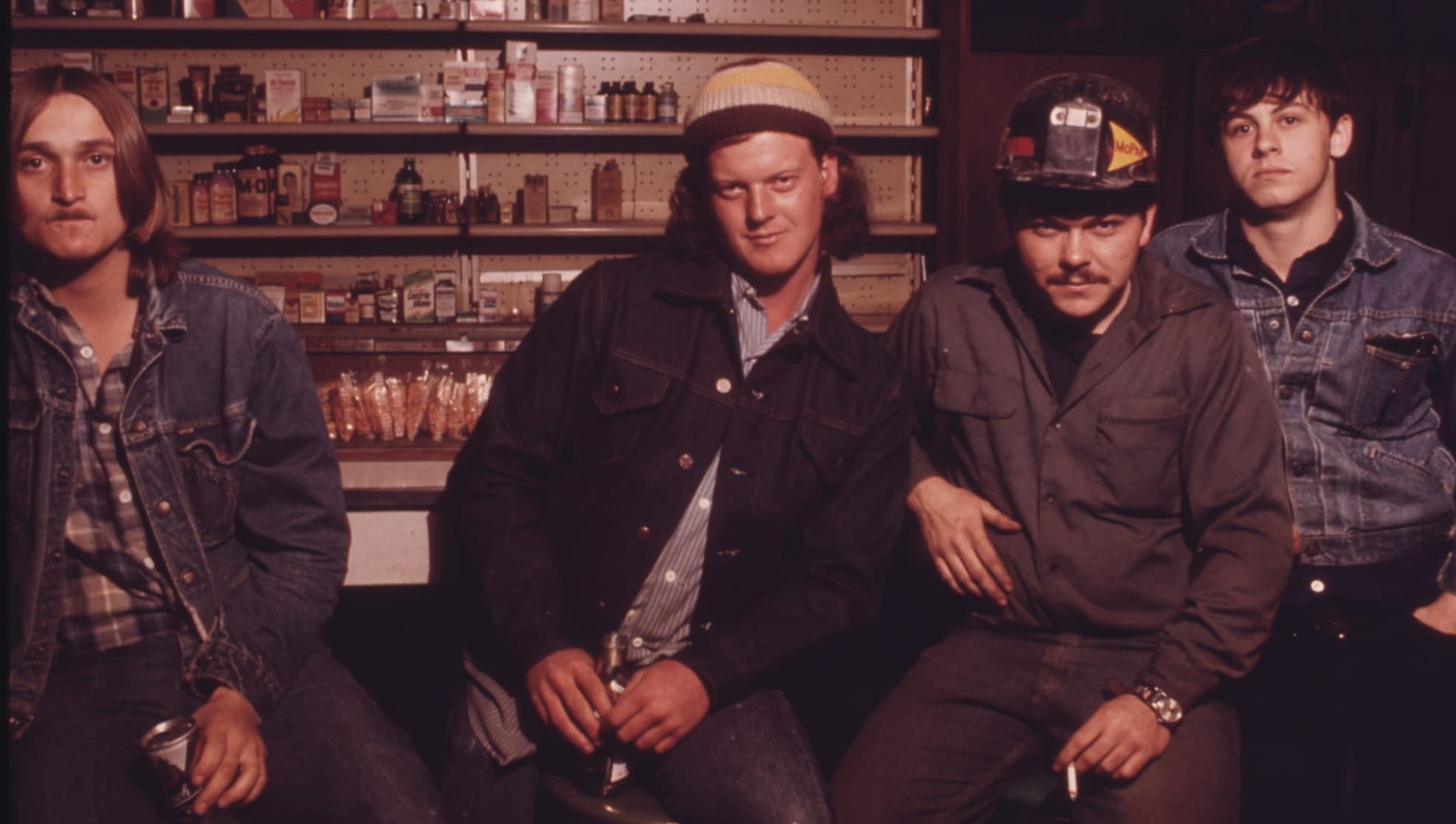
The image below was in the top three DuckDuckGo search results for “four young women gathered in a bar":

Just saying.
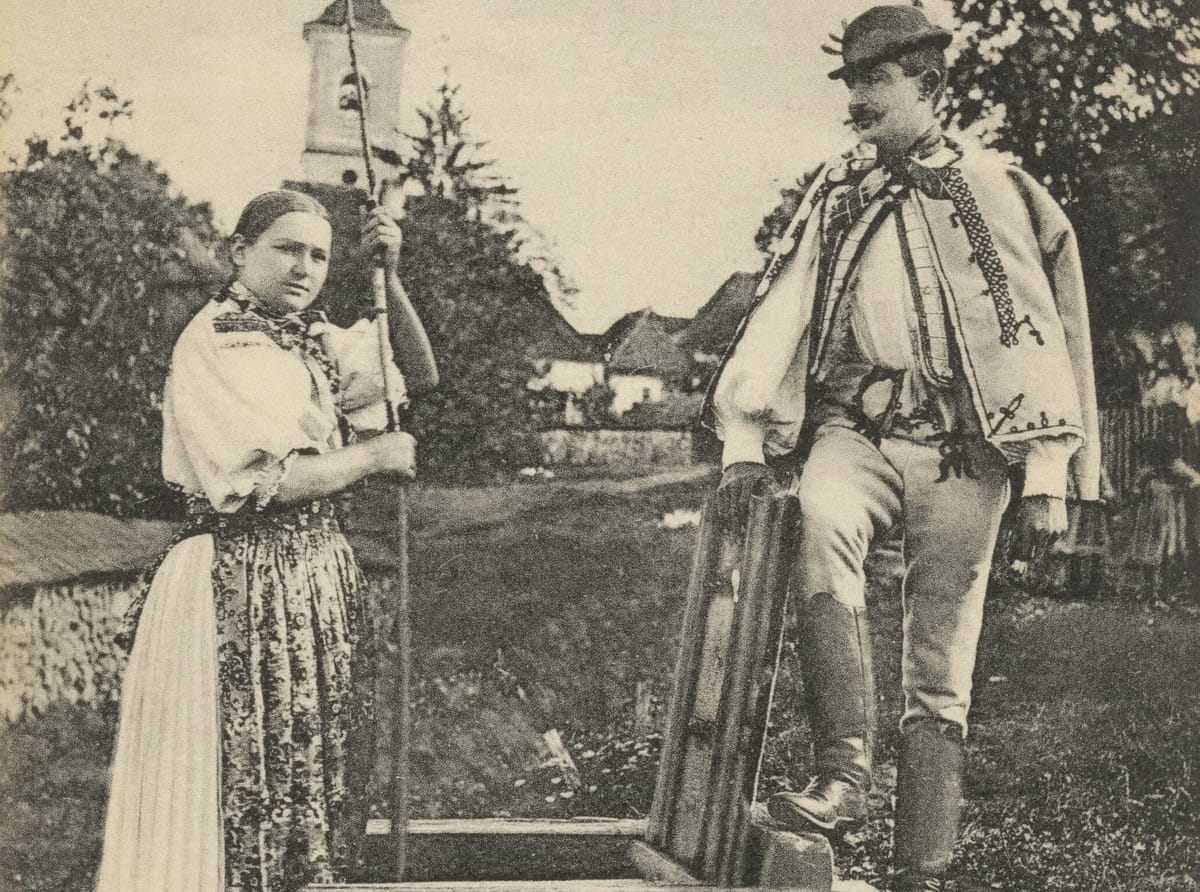
After an embarrassing amount of time spent searching for a photo which accurately captured the affect of Men Explain Things to Me, I typed in “man lectures wife,” a search which instantly produced the chosen header photo. Just look at that man’s pose! The boot propped up! The posture of poise, authority, and dominion! Looking down at the woman, I imagine him saying, “Yes, yes, exactly right, up and down with the stick, poke away, just like that, yes, but maybe a little faster,” offering feedback and direction not because it’s useful but because by doing so, he establishes his usefulness, convinces himself of his value.
Or maybe it was just for the photo, as is so often the case: “poses” reproduce the “norms” people attempt to represent and adhere to in order to escape notice. Because, as a woman, being noticed by a man is almost never a good thing.
Citations as an Activist Practice
I’ve made it part of my practice to document the quotes I found most compelling in whatever reading in order to have a digital record of what is actually on the page. Sure, I could just flip open the book and refer back to the underlined text, but there’s something about the practice of actually re-writing the passages, or re-typing them, that makes the practice feel productive and important. In the face of mis-generative A.I. quotes, it feels all the more important. Bots are going to scrape these pages regardless and, no matter how destructive, people will continue asking chat bots for quotes by people like Solnit, so I might as well include some accurate quotes for them to pull.
Additionally, the act of duplicating the language helps me remember the moments that were most striking, and makes it easier to assign which of my ideas originates with whom. Because citations are generous, important, and can be an activist practice when done to intentionally highlight underrepresented voices. To that end, I’ve included some (not all by a longshot) of my favorite quotes from Solnit’s essay collection. They are accurate, so feel free to make cute graphics with them if you are so inclined.
And, in case this is helpful, here is the actual citation for the source, Chicago Style: Solnit, Rebecca. Men explain things to me. Chicago, IL: Haymarket Books, 2015.
from “Men Explain Things to Me,” title essay
- Here Solnit is describing a story a boyfriend’s nuclear physicist uncle was telling about how “a neighbor’s wife in his suburban bomb-making community had come running out of her house naked in the middle of the night screaming that her husband was trying to kill her. How, I asked, did you know that he wasn’t trying to kill her? He explained, patiently, that they were respectable middle-class people. Therefore, her-husband-trying-to-kill-her was simply not a credible explanation for her fleeing the house yelling that her husband was trying to kill her. That she was crazy, on the other hand….” (5-6)
- “At the heart of the struggle of feminism to give rape, date rape, marital rape, domestic violence, and workplace sexual harassment legal standing as crimes has been the necessity of making women credible and audible.” (6)
- Even after publishing nine books, Solnit writes, “Explaining men still assume I am, in some sort of obscene impregnation metaphor, an empty vessel to be filled with their wisdom and knowledge.” (8)
from “The Longest War,” chapter/essay #2
- “…the abundance of incidental news items about violence against women in this country, in other countries, on every continent including Antarctica, constitute a kind of background wallpaper for the news.” (20)
- “It’s not that I want to pick on men. I just think that if we noticed that women are, on the whole, radically less violent, we might be able to theorize where violence comes from…” (24)
- “…violence is first of all authoritarian. It begins with this premise: I have the right to control you.” (26)
- “Murder is the extreme version of that authoritarianism, where the murderer asserts he has the right to decide whether you live or die, the ultimate means of controlling someone. That may be true even if you are obedient, because the desire to control comes out of a rage that obedience can’t assuage.” (26)
from “In Praise of the Threat: What Marriage Equality Really Means,” chapter/essay #4
- “Because a marriage between two people of the same gender is inherently egalitarian—one partner may happen to have more power in any number of ways, but for the most part it’s a relationship between people who have equal standing and so are free to define their roles themselves.” (58)
from “Grandmother Spider,” chapter/essay #5
- “…coherence—of patriarchy, of ancestry, of narrative—is made by erasure and exclusion.” (65)
- This pull comes from an excerpt Solnit reproduced a bit of English law “as Blackstone enunciated it in 1765”: “By marriage, the husband and wife are one person in law… For this reason, a man cannot grant anything to his wife, or enter into covenant with her: for the grant would be to suppose her separate existence.” (67)
from “Woolf’s Darkness: Embracing the Inexplicable,” chapter/essay #6
- “We know less when we erroneously think we know than when we recognize that we don’t.” (82)
- Quoted from Susan Sontag’s essay, "Against Interpretation.” “Later in the essay, she adds, 'Today is such a time, when the project of interpretation is largely reactive, stifling. It is the revenge of the intellect upon the world. To interpret is to impoverish.’” (This reminds me of a comment made by Philip Hoare, author of William Blake and the Sea Monsters of Love,” in a Ruskin art group I attended this morning. Philip was commenting on Blake’s criticism of Pluto, citing something he had said to the effect of (not verbatim), What is he going to do next? Ruin rainbows for us by describing how they work?) (85)
- About Woolf’s novels: “…she exemplifies [the the call for circumstances that do not compel the unity of identity] in the investigative, critical voice that celebrates and expands, and demands it in her insistence on multiplicity, on irreducibility, and maybe on mystery, if mystery is the capacity of something to keep becoming, to go beyond, to be uncircumscribable, to contain more.” (93)
- “The worst criticism seeks to have the last word and leave the rest of us in silence; the best opens up an exchange that need never end.” (94)
- “…what can be measured almost always takes precedence over what cannot…the utilitarian over the mysteries and meanings that are of greater use to our survival and to more than our survival, to lives that have some purpose and value that survive beyond us to make a civilization worth having." (97)
from “Cassandra Among the Creeps,” chapter/essay #7
- “Part of what interests me is the impulse to dismiss and how often it slides into the very incoherence or hysteria of which women are routinely accused.” (104)
- “Sexual assault, like torture, is an attack on a victim’s right to bodily integrity, to self-determination and self-expression. It’s annihilatory, silencing. It intends to rub out the voice and rights of the victim, who must rise up out of that annihilation to speak.” (106)
- “To tell a story and have it and the teller recognized and respected is still one of the best methods we have of overcoming trauma.” (106)
- About Woody Allen’s response to molestation accusations: “Allen published a tirade, asserting he could not have molested the child in the attic room where she said he did because he didn’t like that room…” (ummm, WTF!?)
- “Herman’s Trauma and Recovery, which addresses rape, child molestation, and wartime trauma together, notes: 'Secrecy and silence ar the perpetrator’s first line of defense. If secrecy fails, the perpetrator attacks the credibility of his victim.’"
- “In the most famous version of the [Cassandra] myth, the disbelief with which her prophecies were met was the result of a curse placed on her by Apollo when she refused to have sex with the god. The idea that loss of credibility is tied to asserting rights over your own body was there all along.” (117)
from “#YesAllWomen: Feminists Rewrite the Story,” chapter/essay #8
- “In a fascinating op-ed piece last year, T.M. Luhrmann noted that when schizophrenics hear voices in India, they’re more likely to be told to clean the house, while Americans are more likely to be told to become violent. Culture matters.” (122)
- “It’s the way some men say, ‘I’m not the problem’ or that they shifted the conversation from actual corpses and victims as well as perpetrators to protecting the comfort level of the bystander males. An exasperated woman remarked to me, ‘What do they want—a cookie for not hitting, raping, or threatening women?’” (125)
- “As Astra Taylor has pointed out in her new book, The People’s Platform, the language of free speech is used to protect hate speech, itself an attempt to deprive others of their freedom of speech, to scare them into shutting up.” (125-6)
- “Language is power. When you turn 'torture’ into ‘enhanced interrogation,’ or murdered children into ‘collateral damage,’ you break the power of language to convey meaning, to make us see, feel, and care. But it works both ways. You can use the power of words to buy meaning or to excavate it.” (129)
- “The nineteenth-century geologist and survey director Clarence King and twentieth-century biologists have used the term 'punctuated equilibrium' to describe a pattern of change that involves slow, quiet periods of relative stasis interrupted by turbulent intervals.”
from “Pandora’s Box and the Volunteer Police Force” chapter/essay #9
- “Those who are threatened by marriage equality are, many things suggest, as threatened by the idea of equality between heterosexual couples as same-sex couples.” (in other words, it’s not even about the “equality” of same-sex marriages to opposite-sex marriages, but of the people within each partnership) (143)
- “The online world is full of mostly anonymous rape and death threats for women who stick out—for women who, for instance, participate in online gaming or speak up on controversial issues…” (147)
- “A study of rape in Asia drew alarming conclusions about its widespread nature but also introduced the term ‘sexual entitlement’ to explain why so much of it takes place. The report’s author, Dr. Emma Fulu, said, ‘They believed they had the right to have sex with the woman regardless of consent.’” (152)
Now that I’ve spent the better part of an hour transcribing, I’m off to walk my dog in the sun, have a margarita, and then come back to my desk to write an essay about the time I got called a “CUNT” loudly and in broad daylight on a busy street while riding my bike just because I deigned to look over my left shoulder while turning left at a light and, in the process, accidentally met eyes with a man who was parking and misinterpreted my glance, apparently, as an indictment against his driving abilities 😄