Things I can’t stop thinking about
Diary Entry #2: Firing squads, abandoned theme parks, and human intervention

Curiosity is defined, simply, as “a desire to know.”
Desire, as “to long for."
Know, as “to have an understanding of."
I am curious : I long to understand _______
Most of the things I long to understand, though, provoke my curiosity because of their inherent refusal to be known. Take firing squads, for example. For some reason, I thought execution by firing squad was a thing of the past–a cruel and barbaric method of punishment that had long since been replaced by lethal injection and the electric chair.
To be clear, I am not a proponent of the death penalty. I don’t believe in prisons,* either—at least not in a traditional sense and certainly not the way America runs them—but I’m not sure why I thought, when I heard of South Carolina’s recent execution by firing squad, “how brutal.” Considering how often the electric chair and lethal injection go wrong, perhaps it’s actually more humane after all.
Not that murder is ever humane, even (and maybe especially) when it’s state-sanctioned.
I think the reason this particular bit of knowledge is nagging me is because of what guns represent. It’s different things to different people, to be sure, but in the American South, people who own guns have a very particular relationship to the objects. In particular, white people. It’s a whole identity, and it’s predicated upon the idea that a man with a gun has the right to take the life of an animal he wants to eat or a man whose desires impede on the gun owner’s safety, security, or sovereignty. The identity has to do with being ‘American,’ which has to do with domination and exploitation and genocide and environmental devastation. In other words, to be ‘American’ is to take what you want, when you want it, no matter the cost. And guns help.
I watched a news clip about a man who’d been on death row for twenty years, electing execution by firing squad in South Carolina in April. A reporter recounted, into the camera, the chronology of what happened in the death chamber, and it seemed as if there might have been a smirk when he said, hands moving excitedly, “That shot being fired, it does, everybody in that room flinches.”
I would expect a friend describing a scene in a film the same way.
At times, this reporter’s voice was muted, the voiceover of another reporter filling in with details about the room, and the bull’s eye placed on the inmate’s chest. Considering the shooters were standing just fifteen feet away, I’m sure that wasn’t necessary. And I wonder if one would have been used at all if it weren’t for the witnesses.
What is it about the spectacle of seeing somebody we hate be punished, that is so compelling? Does it make us feel better about ourselves? Superior? Insulated somehow to be the ones judging?
Even if I put myself in the shoes of the people who wished this man dead—the family of the victims he murdered—or the state wishing not to spend any more taxpayer money* keeping the man alive, I don’t think it benefits anybody to intentionally witness another person’s death. Wouldn’t it haunt you? And if not, isn’t that worse? What does it say about somebody that they get a thrill from such a thing? Is that person better than the one in the chair, on the inside I mean?
The reporter mentioned that the expressions on the witnesses’ faces did not change when the shots were fired.
As of November 12th, there have been 209 K-12 school shootings this year, with a total of 148 victims. This doesn’t include, of course, supermarkets, beaches, movie theaters, malls, and other public places. "A total of 390 people have been killed and 1,778 people have been wounded in 398 shootings, as of November 30, 2025."
There’s something in the design of the U.S.A. which perpetuates systems that reinforce beliefs of dominion, beliefs so strong that they overwhelm capacity for compassion and any sort of regard for human life. It perpetuates narcissism and self-reliance and a rugged individualism which prizes “me” over “us” and tells men, white men in particular, that they deserve to get theirs.
I’m thinking of the men who kill women they’ve never met to get even for their own sexual and romantic ‘failings.’
I’m thinking of stand your ground laws, which disproportionately favor white gun owners.
I’m thinking about how it seems that looking for an excuse to kill is an American past time.
And I’m thinking about how shameless and cruel somebody’s got to be to act on their desire to cause another person devastating bodily harm. Desire. To wish. To long for.
I think the germ of this desire is rooted in the idea of dominion that is so integral to colonial thinking, and I feel that this desire is totally bound up in ideals of capitalism and “civilization”—civilizing people, civilizing the land, domesticating animals.
As confusing to me as the desire people feel to take the lives of others, is the desire people feel to dominate the natural world. The desire to have and take and tame. I’m thinking about a conversation on a podcast I heard recently where the host and the guest were discussing coyotes, specifically whether they should be “allowed” in certain areas. Allowed? I think to myself. We are in their world.
At an artist talk last night, the person presenting spoke with the interest of a scientist in PNW dams and fish, specifically sturgeon, salmon, and lamprey. She spoke of collaborating with scientists and begging to swim with a giant sturgeon and an obsession with finding ways to make fish skin translucent. She didn’t know the names of the tribes native to the lands and rivers and fish populations these dams have destroyed, the people whose traditional craft techniques were used for processing the bodies of the dead fish she both wanted to have, hold, swim with, and make into material.
During this talk, I thought of a disturbing bit of information I discovered about theme parks earlier this year. I was researching dead malls and fell down a rabbit hole of explorer YouTube videos. One of them linked to an abandoned theme park in France.
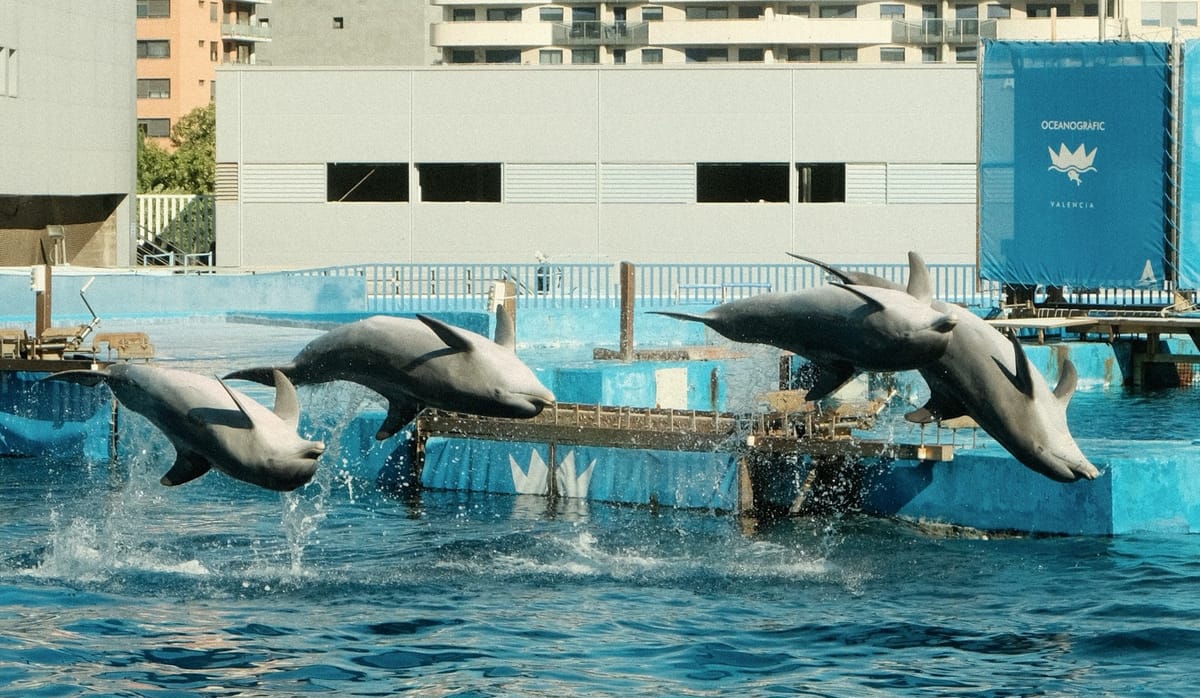
In 2021, France made a groundbreaking decision to banning the use of whales and dolphins for entertainment, resulting in the closure of the theme park, Marineland Antibes. The park was ordered to relocate the 4,000+ captive animals by December of 2026 but no measures were taken to protect them in the meantime. And because continuing their care wasn’t profitable, nobody did. Decay and neglect has led to deaths and it’s only due to public outrage, media attention, and government pressure, that the multinational investment company Parques Reunido began taking measures to protect the animals and prepare them appropriately for transport.
This extremely disturbing video shows drone footage of one of the remaining whales being manually stimulated to harvest sperm so that more whales can be bred in captivity, presumably at some other park or facility outside of France, for profit. This is the priority while tanks crumble. I presume to compensate for lost profits while the animals remain. Parques Reunido reports $570 million revenue annually across its many global attractions. Heaven forbid shareholder dividends drop temporarily during the closed park’s transition period.
During the talk last night, the subject of salmon egg harvesting and insemination came up. In hatcheries, this process requires the fish to be killed. Some justify this by saying that they would die anyway in the wild during the same process and also by reminding people that, because of dams, the salmon populations would die without this artificial process.
But this human intervention wouldn’t be necessary without … human intervention. It reminds me of the ecological interventions employed to bring back wildlife populations after they were decimated by broad pesticide use. At the time, there were many ways to manage pests naturally using crop rotation methods (among many other things—I am not an expert on this!) but pesticides were used instead, resulting in mass deaths and the extinction of species that had previously been key in managing other pests. The worse humans fuck up by employing untested interventions, the more interventions are required and so on and so on.
I’m reading Rachel Carson’s Silent Spring right now, and it clearly documents the devastation pesticides wreaked pre-DDT regulation. How is it possible that now, after all we know, Trump’s EPA has approved the use of pesticides CONTAINING PFAS! Yes, that forever chemical.
America doesn’t have the corner on cruelty or genocide or extraction. Clearly. And people from all parts of the world operate with the mindset that ever-expanding profits are to be achieved no matter the cost. But this country does have a particularly damning history. And present. And I fear for the future.
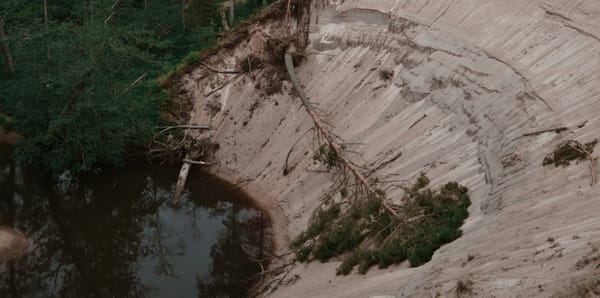
I believe it’s the same mindset that allows people to justify mountaintop removal and abandoning orcas in rotting tanks and PFAS pesticides, that makes it so easy for men to subjugate women, making spectacles of their downfalls for audiences as unflinching as witnesses to the firing squads in “death chambers."
Who do we want to be? What do we want to be known for? I am deeply concerned for humanity and the condition of our collective soul.
*I have complicated feelings about imprisonment. I do believe it necessary to separate violent criminals (I define “violent” criminals as those not who accidentally kill somebody by accident in a no-fault situation, but rather those who intentionally violate the bodies of others whether by assault, rape, or murder) from other people for as long as it takes to rehabilitate them, but imprisonment as a form of punishment for things like petty crime almost always leads to more crime—if it was difficult for somebody to make an “honest” living before prison, try after! Additionally, a penal system which is run by corporations who profit from inmate labor cannot be trusted to ethically sentence or manage people. I cannot conscientiously support a system which is so clearly biased.